

Whether you are hunting for a timeless strand of wedding pearls or a modern statement piece, choosing between freshwater and seawater (saltwater) pearls can be surprisingly complex. This guide is designed for jewelry enthusiasts and first-time buyers alike, helping you navigate the nuances of luster, origin, and value so you can invest with confidence.
At Jescojes, we believe that every pearl tells a story. By the end of this article, you will understand why a Starry Night Freshwater Pearl Necklace is perfect for daily elegance, while an 18K Gold Solitaire Golden South Sea Pearl Pendant represents the pinnacle of luxury.
Quick Comparison and Key Differences
Before diving into the science, let’s look at the top five contrasts that define these two categories:
Luster: Saltwater pearls generally have a sharper, more mirror-like reflection. Freshwater pearls have a softer, warmer glow.
Shape: Freshwater pearls come in a vast array of shapes (including many irregular ones), whereas saltwater pearls are more consistently round.
Nacre Thickness: Freshwater pearls are often solid nacre, making them incredibly durable. Saltwater pearls have a bead core covered by layers of nacre.
Price: Due to rarity and farming difficulty, saltwater pearls command a much higher price point.
Variety: Freshwater pearls offer a wider range of natural pastel colors; saltwater pearls are known for specific iconic hues like gold, white, and black (Tahitian).
Side-by-Side Comparison
|
Feature |
Freshwater Pearls |
Saltwater (Sea Water) Pearls |
|
Growth Environment |
Lakes, Rivers, Ponds |
Oceans, Lagoons, Bays |
|
Mollusk Type |
Mussels |
Oysters |
|
Typical Shape |
Oval, Potato, Baroque, Round |
Perfectly Round, Teardrop |
|
Common Colors |
White, Pink, Lavender, Peach |
White, Gold, Black, Silver |
|
Value Tier |
Budget to Mid-Range |
Luxury / Investment |
Who should buy what? Freshwater pearls are the "workhorse" of the jewelry world—ideal for budget-conscious buyers and fashion-forward designs. Saltwater pearls are for luxury buyers seeking heirloom quality and status.
Types of Pearls and Cultured Pearl Basics
To shop wisely, you must understand how pearls are made.
Natural pearls are accidents of nature, formed when an irritant enters a wild mollusk. They are incredibly rare and mostly found in museums or auctions. Cultured pearls are the standard today; humans "seed" the mollusk to initiate the pearl-growing process.
The Nacre Factor: When an irritant enters the shell, the mollusk protects itself by secreting nacre (mother-of-pearl). This crystalline substance layers over time, creating the pearl’s glow. In freshwater mussels, many pearls can grow at once (up to 30+), while saltwater oysters usually produce only one or two, contributing to the price disparity.

Cultured Freshwater Pearls: The Versatile Choice
Freshwater pearls are farmed primarily in the lakes and rivers of China, which serves as the global market center.
Traditionally, these are tissue-nucleated, meaning a small piece of donor mantle tissue is inserted into the mussel. This results in a pearl that is nearly 100% solid nacre. Recently, bead-nucleated freshwater pearls (like Edison pearls) have emerged, allowing for larger, perfectly round sizes that rival saltwater quality.
- Size: Generally 2mm to 10mm (Edison pearls can reach 15mm+).
- Production: High volume makes them accessible and affordable.
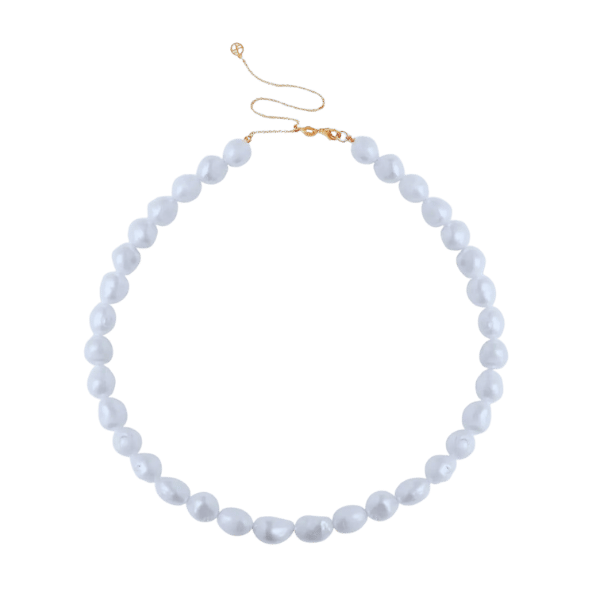
- Best for: Daily wear and contemporary styles like our Starry Night AAA Freshwater Pearl Necklace.
South Sea Pearl Details: The Queen of Pearls
South Sea pearls are the gold standard of luxury. Found in the waters of Australia, Indonesia, and the Philippines, they are produced by the Pinctada maxima oyster.
- Size: Huge, typically ranging from 8mm to 20mm.
- Colors: Silvery-white or the breathtaking "Deep Gold."
- Rarity: They require a longer growth period (2-4 years) in sensitive environments, making them rare and high-value.
Our 18K Gold Solitaire Golden South Sea Pearl Pendant showcases this rarity, featuring a natural golden hue that requires no treatment to shine.
Specialty Types: Mabe, Baroque, and More
Not all pearls are round, and often, the most artistic pieces come from "imperfect" shapes.
Mabe Pearls
Mabe pearls are half-pearls grown against the inside of the oyster's shell rather than within its tissue. This results in a flat back, making them perfect for earrings and large pendants that sit flush against the skin.
Baroque Pearls
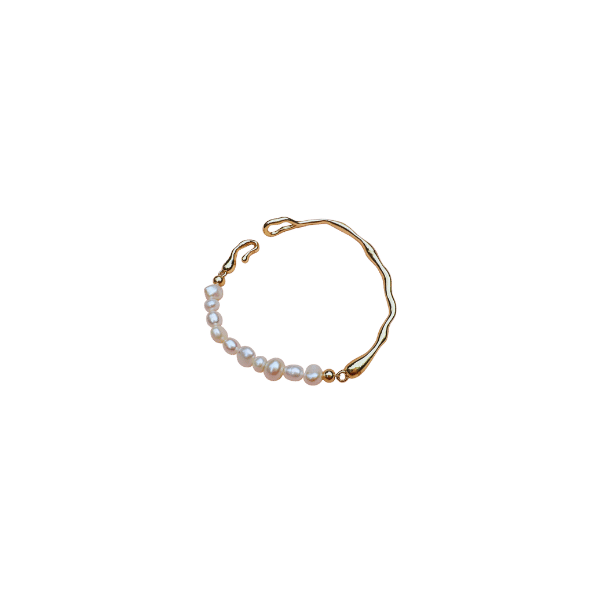
"Baroque" refers to any pearl with an irregular, non-symmetrical shape. They are beloved by modern designers for their "one-of-a-kind" appeal. Because no two are alike, they offer a highly personalized aesthetic for contemporary jewelry.
Notable mentions:
- Keshi Pearls: Tiny, non-nucleated "accidental" pearls made of pure nacre.
- Conch Pearls: Non-nacreous pearls (they don't shine like traditional pearls) with a flame-like pattern, found in the Caribbean.
Perfect Pearl Criteria and Grading
When inspecting a pearl, look for these four "S" factors:
- Luster: The most important factor. Is the reflection sharp or dull?
- Surface: Are there many pits, spots, or cracks? (Minor birthmarks are normal in natural gems).
- Shape: Is it perfectly round, or a pleasing symmetrical drop?
- Color: Does it have a rich body color and a secondary "overtone" (like a pink tint on a white pearl)?
Pro Tip: Always ask for a grading report for high-end purchases. While there is no universal industry standard like the 4Cs for diamonds, reputable brands like Jescojes use the AAA-A system to ensure quality.
Pricing, Value, and Investment
- Freshwater: $20 – $500+. Great for fashion and gifts.
- Saltwater: $500 – $10,000+. These are true investment pieces.
Value is driven by rarity and time. A strand of South Sea pearls represents years of harvests to find enough matching colors and sizes. If you want a piece that holds its value or becomes an heirloom, opt for Sea Water pearls. For a trendy, beautiful necklace you can wear to the office every day, Freshwater is the winner.
Choosing Pearl Jewelry and Styles
- Skin Tone: White and pink-toned pearls (Freshwater/Akoya) flatter cool skin tones. Golden South Sea pearls look stunning on warm or tanned skin.
- Occasion: A simple pendant is perfect for professional settings. A full strand of AAA Freshwater pearls is the classic choice for weddings.
- Budget Hack: If you want the "South Sea look" on a budget, look for high-grade, large-bead nucleated Freshwater pearls.
Care, Maintenance, and Longevity
Pearls are organic gems and are quite delicate (2.5 to 4.5 on the Mohs scale).
- The Golden Rule: Pearls should be the last thing you put on and the first thing you take off.
- Avoid Chemicals: Perfumes, hairspray, and sweat can eat away the nacre.
- Cleaning: Wipe them with a soft, damp cloth after wearing. Never use ultrasonic cleaners.
- Storage: Store them in a soft pouch, separate from hard gemstones like diamonds that could scratch them.
Buying, Authentication, and Inspection
The Tooth Test: Rub the pearl gently against the edge of your tooth. A real pearl (freshwater or saltwater) will feel gritty or sandy; a fake glass pearl will feel smooth.
Inspect Drill Holes: Look for chipping around the hole. In high-quality pearls, the nacre should be thick and the hole cleanly drilled.
Check Origin: Ensure the seller specifies if the pearl is Freshwater, Akoya, Tahitian, or South Sea.
Conclusion: Which Pearl Should You Choose?
The "better" pearl depends entirely on your needs:
- Choose Freshwater Pearls if: You want durability, variety in color, and an affordable price for high-quality jewelry like the Starry Night Necklace.
- Choose Sea Water Pearls if: You are looking for a luxury statement, a mirror-like luster, and a piece that retains significant value, such as our Golden South Sea Pendant.
At Jescojes, we curate the finest examples of both worlds. Explore our collections today and find the pearl that speaks to you.